

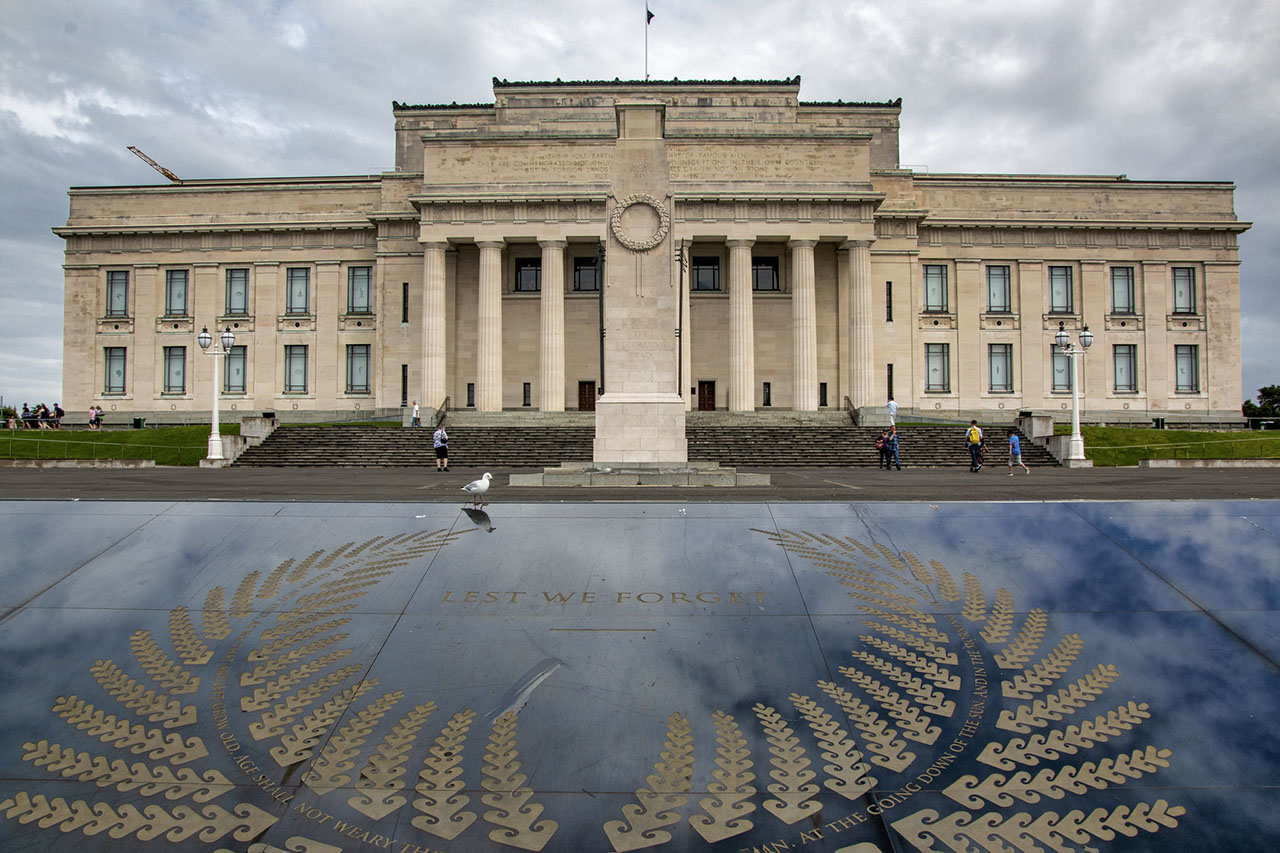
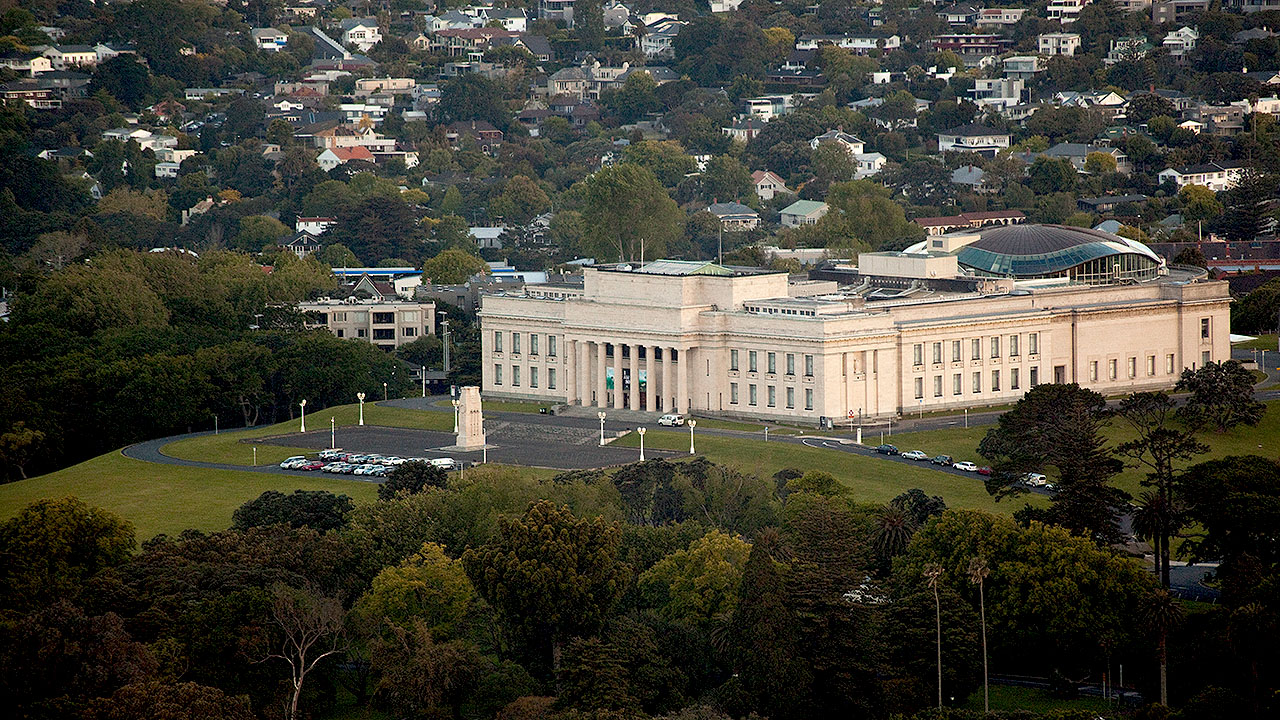
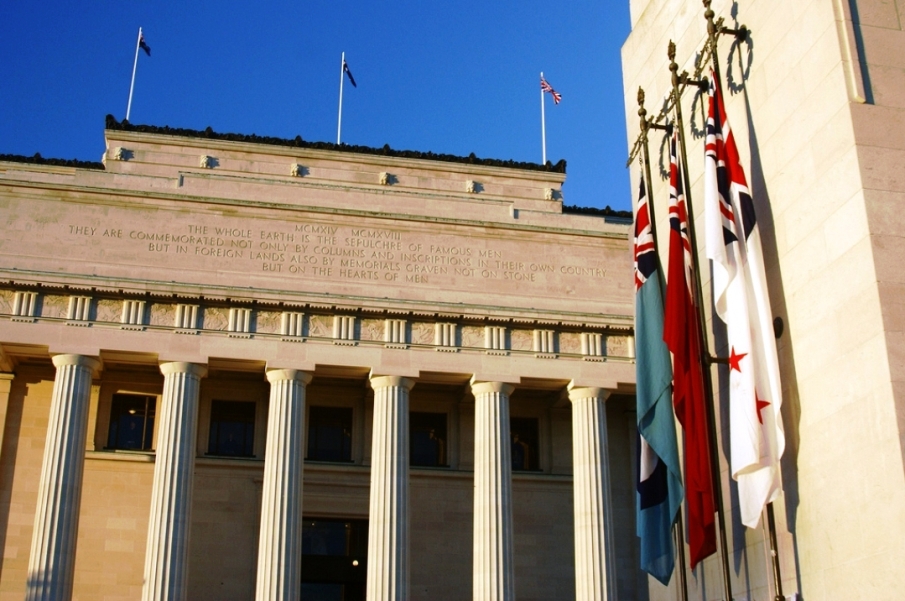
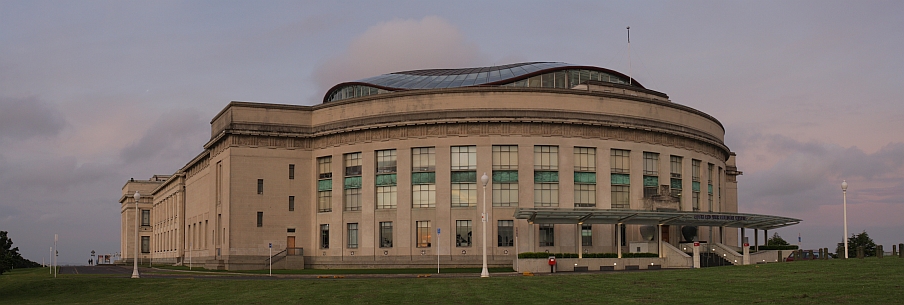
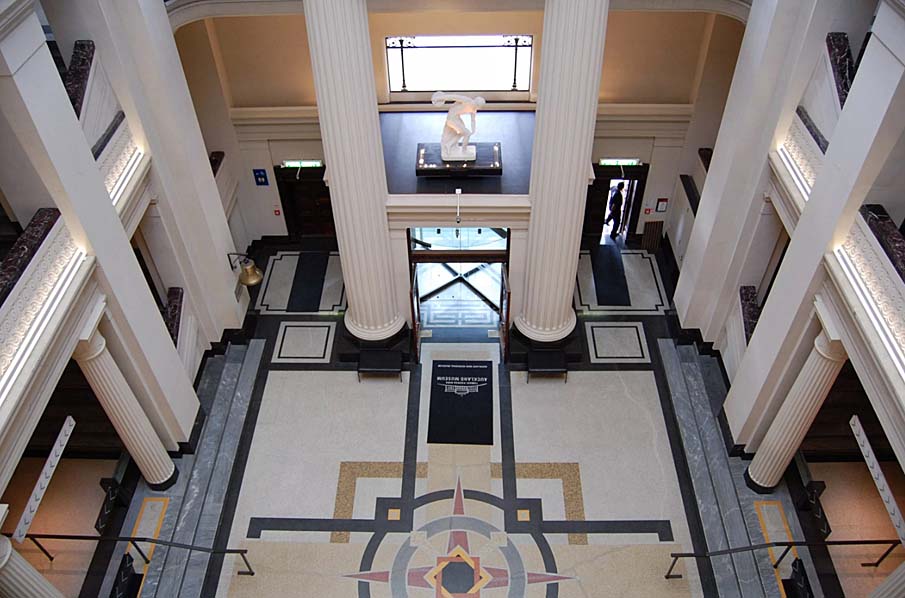
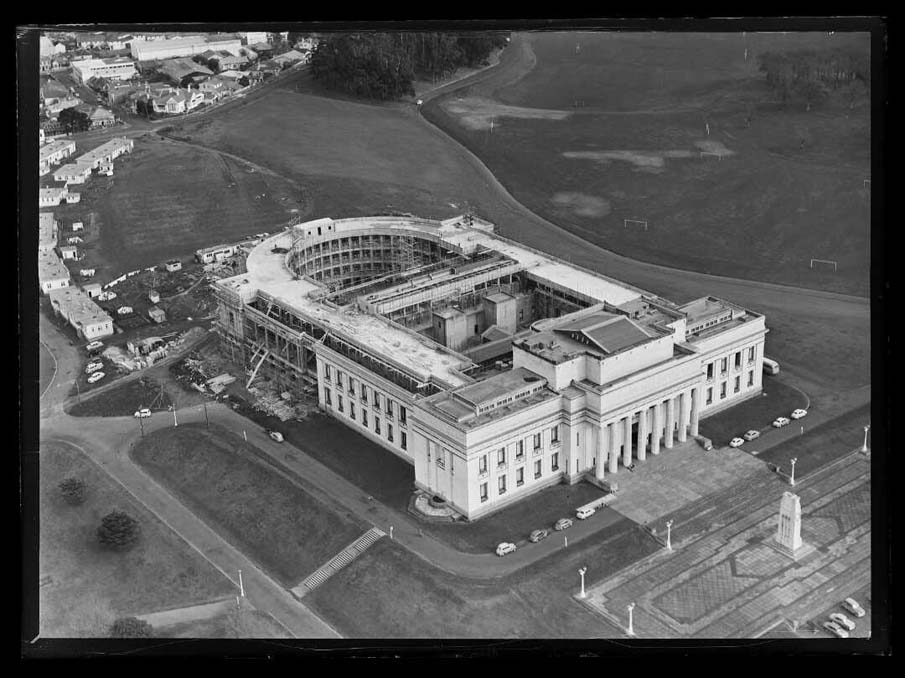
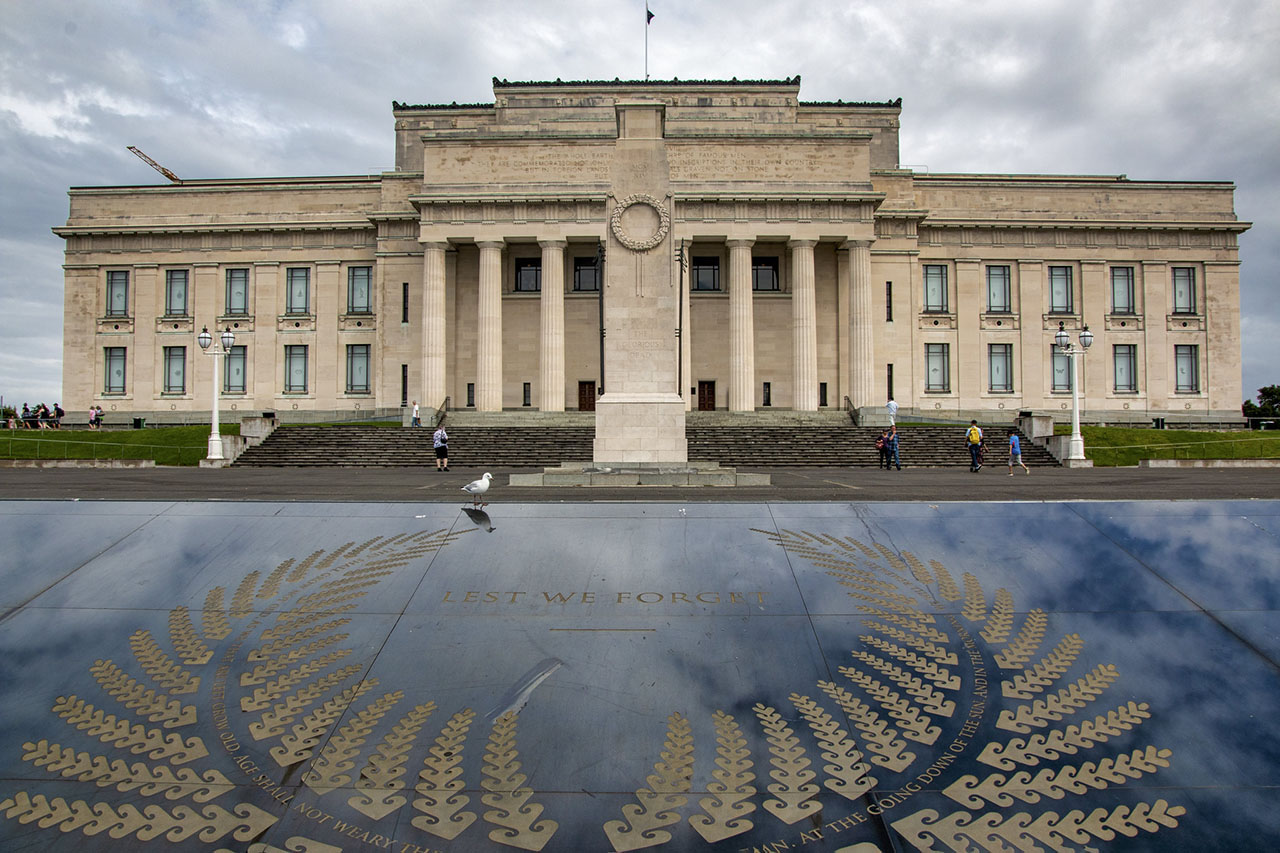
The earliest part of the Portland stone and reinforced concrete building was constructed in a classical Greek Revival style, inspired by similar public buildings in Britain and the USA, and the heroic associations of classical Greece. Its Auckland-based architects - Grierson, Aimer and Draffin - had all served in the First World War and were appointed after winning an international competition. The building contains numerous references to the Great War, including friezes and the names of battles on its exterior. Its interior evokes a strong sense of national pride through the use of Maori and native botanical motifs. National identity was also promoted through the prominence given to Maori artifacts in the main exhibition hall. The structure was recognised at the time of its construction, being awarded a gold medal by the New Zealand Institute of Architects in 1929. The building retained its symbolism when a large extension was added to the rear in 1956-1960. This commemorates those from the province who died in the Second World War and, involving Keith Draffin, is similar in style to the original building. A more recent memorial inside the building remembers combatants from all over New Zealand who fell in Malaya, Korea and Vietnam.
The Auckland War Memorial Museum has national and international significance as a major monument to the fallen in two world wars. It has important spiritual connections as a memorial to the many northern New Zealanders - both Maori and Pakeha - who have died in conflict. The building enjoys high public esteem and is important for attesting the strength of national sentiment after both world wars. It is considered to be one of the most successfully designed Greek Revival buildings in Australasia, demonstrating an important fusion of overseas and New Zealand-inspired architectural styles. The structure is a valuable statement of New Zealand identity, extending to its association with the largest collection of Maori and Polynesian artifacts in the country. It is an important part of the city skyline, and is of considerable value for its links to other places associated with war and peace, such as the cenotaph, the adjacent pa of Pukekaroa, where a peace-making ceremony was held between Tainui and Ngapuhi in 1828, and the Maori battle site of Toki Whatinui. It is also a centrepiece of the Auckland Domain, attesting to the educational and commemorative role of the twentieth-century park.
List Entry Information
Status
Listed
List Entry Status
Historic Place Category 1
Access
Able to Visit
List Number
94
Date Entered
27th June 1985
Date of Effect
27th June 1985
City/District Council
Auckland Council
Region
Auckland Council
Legal description
Pt Auckland Domain (RT NA75C/138), North Auckland Land District
Status
Listed
List Entry Status
Historic Place Category 1
Access
Able to Visit
List Number
94
Date Entered
27th June 1985
Date of Effect
27th June 1985
City/District Council
Auckland Council
Region
Auckland Council
Legal description
Pt Auckland Domain (RT NA75C/138), North Auckland Land District
Construction Professional
Name
Grierson, Aimer & Draffin
Type
Architectural Partnership
Biography
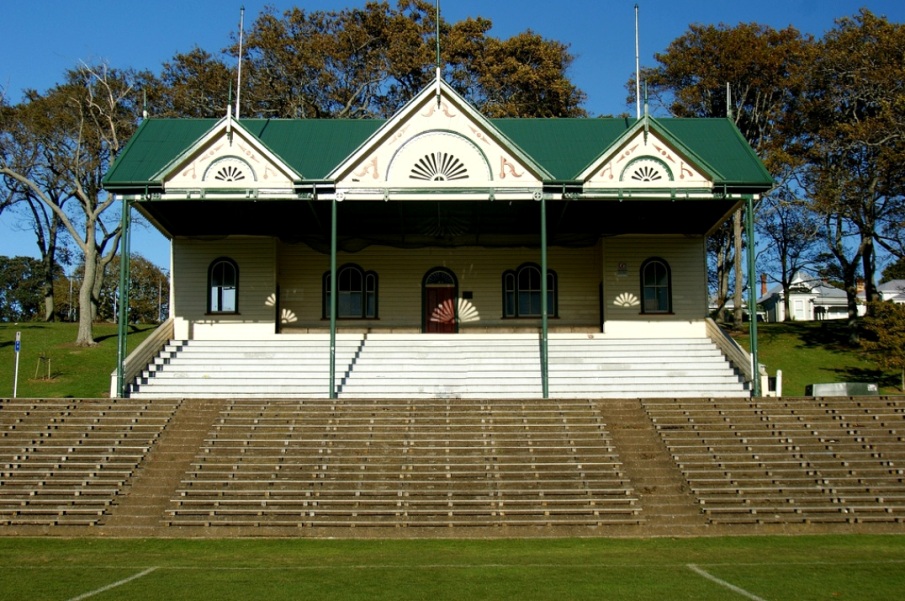
Hugh Cresswell Grierson (1886-1953) was practising as an architect prior to the First World War. He served in the New Zealand Army and remained overseas to continue his studies at the Architectural Association in London. He became an Associate of the Royal Institute of British Architects. He returned to New Zealand and went into partnership with Kenneth Walter Aimer (1891-1960), a fellow student in London. Aimer was educated at Auckland Teachers' Training College and Auckland University College. He became a registered architect in 1918, and later travelled to England to continue his studies. He became an Associate of the Royal Institute of British Architects in 1925. Malcolm Keith Draffin (1890-1964) was in partnership with Edward Bartley and his son Alva when the First World War began. Draffin served in the army and was awarded the Military Cross. He remained in London after the war to study at the Architectural Association, and was elected a Fellow of the Royal Institute of British Architects. Following Edward Bartley's death in 1919, Alva Bartley and Draffin dissolved the partnership. The Auckland Institute and Museum complex was the major work of the firm, for which they were awarded a Gold Medal by the New Zealand Institute of Architects in 1929. The firm's other work includes the South British Insurance Company, Shortland Street and a number of cinema's including the Capitol, Dominion Rd (1922), the Rialto, Newmarket (1923), the Collosseum/Majestic, Queen Street (1924) and the Edendale cinema (1926). They were one of the first Auckland firms to adopt the Art Deco style popular in America, as can be seen in the Gifford's Building (1929), and they also designed in the Stripped Neo-Classical style as seen in the Northcote War Memorial Pavilion (1922) and the Parnell Library (1923). The Depression halted most building activity and as a result the partnership was disbanded. Draffin and Aimer practised separately while Grierson took up farming.
Construction Details
Start Year
1924
Finish Year
1929
Type
Original Construction
Start Year
1956
Finish Year
1960
Type
Addition
Description
Rear addition
Start Year
1969
Type
Addition
Description
Auditorium and supper room added
Start Year
1995
Finish Year
2001
Type
Modification
Description
Major refurbishment
Notable Features
Registration covers the building, its fixtures and finishes. It also includes recent modifications. The building is considered to lie on the site of Pukekawa, which may have been used for horticultural activity in the pre-colonial period.
Construction Professional
Name
Grierson, Aimer & Draffin
Type
Architectural Partnership
Biography
Hugh Cresswell Grierson (1886-1953) was practising as an architect prior to the First World War. He served in the New Zealand Army and remained overseas to continue his studies at the Architectural Association in London. He became an Associate of the Royal Institute of British Architects. He returned to New Zealand and went into partnership with Kenneth Walter Aimer (1891-1960), a fellow student in London. Aimer was educated at Auckland Teachers' Training College and Auckland University College. He became a registered architect in 1918, and later travelled to England to continue his studies. He became an Associate of the Royal Institute of British Architects in 1925. Malcolm Keith Draffin (1890-1964) was in partnership with Edward Bartley and his son Alva when the First World War began. Draffin served in the army and was awarded the Military Cross. He remained in London after the war to study at the Architectural Association, and was elected a Fellow of the Royal Institute of British Architects. Following Edward Bartley's death in 1919, Alva Bartley and Draffin dissolved the partnership. The Auckland Institute and Museum complex was the major work of the firm, for which they were awarded a Gold Medal by the New Zealand Institute of Architects in 1929. The firm's other work includes the South British Insurance Company, Shortland Street and a number of cinema's including the Capitol, Dominion Rd (1922), the Rialto, Newmarket (1923), the Collosseum/Majestic, Queen Street (1924) and the Edendale cinema (1926). They were one of the first Auckland firms to adopt the Art Deco style popular in America, as can be seen in the Gifford's Building (1929), and they also designed in the Stripped Neo-Classical style as seen in the Northcote War Memorial Pavilion (1922) and the Parnell Library (1923). The Depression halted most building activity and as a result the partnership was disbanded. Draffin and Aimer practised separately while Grierson took up farming.
Construction Details
Start Year
1924
Finish Year
1929
Type
Original Construction
Start Year
1956
Finish Year
1960
Type
Addition
Description
Rear addition
Start Year
1969
Type
Addition
Description
Auditorium and supper room added
Start Year
1995
Finish Year
2001
Type
Modification
Description
Major refurbishment
Notable Features
Registration covers the building, its fixtures and finishes. It also includes recent modifications. The building is considered to lie on the site of Pukekawa, which may have been used for horticultural activity in the pre-colonial period.
Historical and Associated Iwi / Hapū / Whānau
Completion Date
21st August 2001
Report Written By
Martin Jones
Information Sources
Shaw, P., 1991
Peter Shaw, New Zealand Architecture: From Polynesian Beginnings to 1990, Auckland, Hodder & Stoughton, 1991.
Conservation Plan
Conservation Plan
Other Information
This place was identified as significant under previous legislation with different information requirements. It remains significant under the current legislation. There is opportunity under our legislation and policies to add to this information. Further information about this place may be available from the Northern Regional Office of Heritage New Zealand Pouhere Taonga. NZIA Gold Award Winners 1929 and National Award Winners 2000 NZIA Local Architecture Award Winners 2009, Category: Public Architecture Please note that entry on the New Zealand Heritage List/Rarangi Korero identifies only the heritage values of the property concerned, and should not be construed as advice on the state of the property, or as a comment of its soundness or safety, including in regard to earthquake risk, safety in the event of fire, or insanitary conditions.
Historical and Associated Iwi / Hapū / Whānau
Completion Date
21st August 2001
Report Written By
Martin Jones
Information Sources
Shaw, P., 1991
Peter Shaw, New Zealand Architecture: From Polynesian Beginnings to 1990, Auckland, Hodder & Stoughton, 1991.
Conservation Plan
Conservation Plan
Other Information
This place was identified as significant under previous legislation with different information requirements. It remains significant under the current legislation. There is opportunity under our legislation and policies to add to this information. Further information about this place may be available from the Northern Regional Office of Heritage New Zealand Pouhere Taonga. NZIA Gold Award Winners 1929 and National Award Winners 2000 NZIA Local Architecture Award Winners 2009, Category: Public Architecture Please note that entry on the New Zealand Heritage List/Rarangi Korero identifies only the heritage values of the property concerned, and should not be construed as advice on the state of the property, or as a comment of its soundness or safety, including in regard to earthquake risk, safety in the event of fire, or insanitary conditions.
Current Usages
Uses: Civic Facilities
Specific Usage: Museum
Uses: Commemoration
Specific Usage: Memorial - Post World War Two
Uses: Commemoration
Specific Usage: Memorial - South African War
Uses: Commemoration
Specific Usage: Memorial - World War One
Uses: Commemoration
Specific Usage: Memorial - World War Two
Web Links
description: Auckland Museum
description: The Memorials Register, New Zealand History Online, Ministry for Culture and Heritage.
description: Engineering NZ Heritage
Current Usages
Uses: Civic Facilities
Specific Usage: Museum
Uses: Commemoration
Specific Usage: Memorial - Post World War Two
Uses: Commemoration
Specific Usage: Memorial - South African War
Uses: Commemoration
Specific Usage: Memorial - World War One
Uses: Commemoration
Specific Usage: Memorial - World War Two
Web Links
description: Auckland Museum
description: The Memorials Register, New Zealand History Online, Ministry for Culture and Heritage.
description: Engineering NZ Heritage
Location
Related listings
Sign up to hear more
Get the latest heritage news, features and events delivered
straight to your inbox.
